Morse Code Alphabet Chart & Pronunciation Guide for Beginners


The Hidden Language Behind Every Beep
Imagine hearing three quick beeps from a flashlight across a dark campsite. Then three long ones. Then three quick ones again.
Without the Morse code alphabet, those sounds mean nothing. Once you know the patterns, you instantly recognize one of the most famous distress signals ever sent: SOS.
That's the magic of Morse code. Tiny sounds become letters. Letters become words. Words become real conversations.
If you're just starting, you're in the perfect place. This Morse code alphabet guide walks you through every letter from A to Z, how the sounds work, memory tricks that actually help, and fun ways to practice without feeling stuck at a desk.
You'll also find pronunciation help, real examples, beginner exercises, and links to tools that let you hear Morse in real time.
Fun Fact
Samuel Morse never planned for Morse code to become a secret language used in flashlights, radios, ships, movies, and emergency rescue situations. It started with telegraph wires in the 1800s. You can read the full story in our guide to the history of Morse code and the telegraph.
Why the Morse Code Alphabet Feels So Addictive to Learn

Most people expect Morse code to feel cold or technical. Then something funny happens.
The sounds start turning into rhythms. Your brain begins hearing patterns instead of dots and dashes.
A short beep followed by a long beep suddenly becomes the letter A. Three quick taps become S. Before long, you start hearing whole words.
That's why so many people stick with Morse code once they begin. It feels more like music or a secret heartbeat than memorizing facts.
Some people learn it for ham radio. Some want an emergency backup communication method. Others just love hidden languages and secret messages.
So, when you learn the Morse code alphabet, you're not only memorizing letters. You're training your ears to hear a completely different way of communicating.
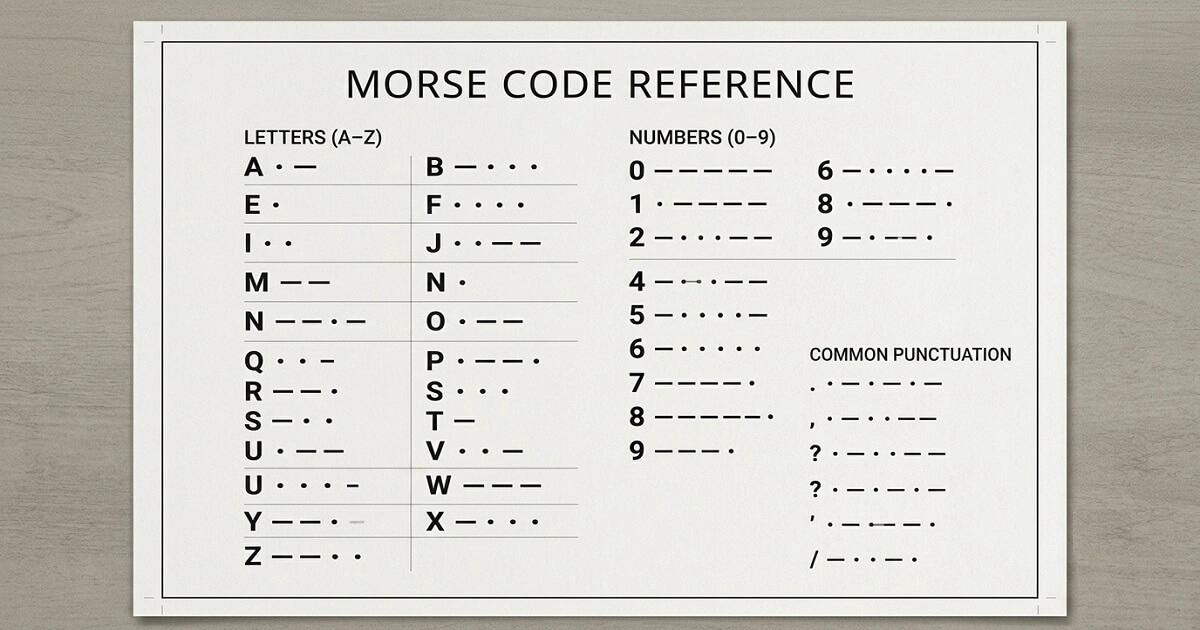
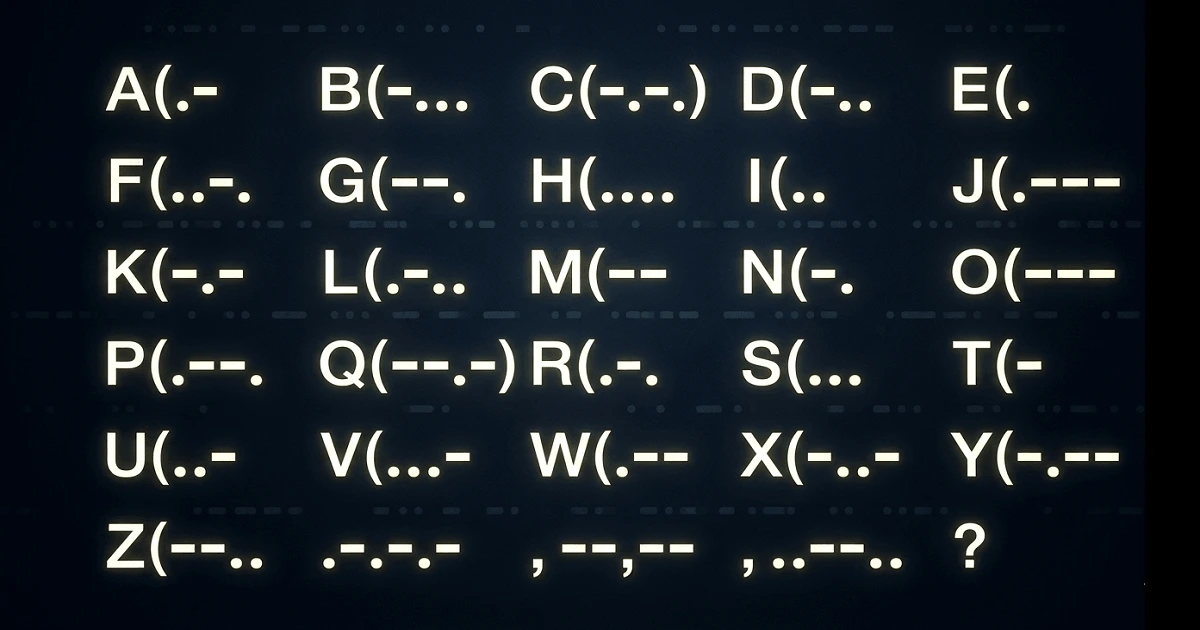
Full Morse Code Alphabet Chart With Pronunciation
Start with the easiest letters first. Don't rush through the whole table. Read a few letters aloud, listen to the rhythm, then test yourself.
| Letter | Morse Code | Pronunciation |
|---|---|---|
| A | .- | dit-dah |
| B | -... | dah-dit-dit-dit |
| C | -.-. | dah-dit-dah-dit |
| D | -.. | dah-dit-dit |
| E | . | dit |
| F | ..-. | dit-dit-dah-dit |
| G | --. | dah-dah-dit |
| H | .... | dit-dit-dit-dit |
| I | .. | dit-dit |
| J | .--- | dit-dah-dah-dah |
| K | -.- | dah-dit-dah |
| L | .-.. | dit-dah-dit-dit |
| M | -- | dah-dah |
| N | -. | dah-dit |
| O | --- | dah-dah-dah |
| P | .--. | dit-dah-dah-dit |
| Q | --.- | dah-dah-dit-dah |
| R | .-. | dit-dah-dit |
| S | ... | dit-dit-dit |
| T | - | dah |
| U | ..- | dit-dit-dah |
| V | ...- | dit-dit-dit-dah |
| W | .-- | dit-dah-dah |
| X | -..- | dah-dit-dit-dah |
| Y | -.-- | dah-dit-dah-dah |
| Z | --.. | dah-dah-dit-dit |
Want to hear these sounds instead of just reading them? Practice these letters using our Morse translator tool. Type any letter or word and listen to the real timing.
How to Hear Morse Code Instead of Reading It
Beginners often stare at dots and dashes too long. Your ears learn faster.
Here's a simple trick:
- A dot (.) sounds short. Say "dit."
- A dash (-) lasts longer. Say "dah."
- Don't pause between sounds inside a letter.
- Pause slightly between letters.
Try This Mini Exercise
Read these aloud slowly:
- ... = S = dit-dit-dit
- --- = O = dah-dah-dah
- ... = S = dit-dit-dit
You just sounded out SOS.
Easy Memory Tricks Beginners Actually Remember
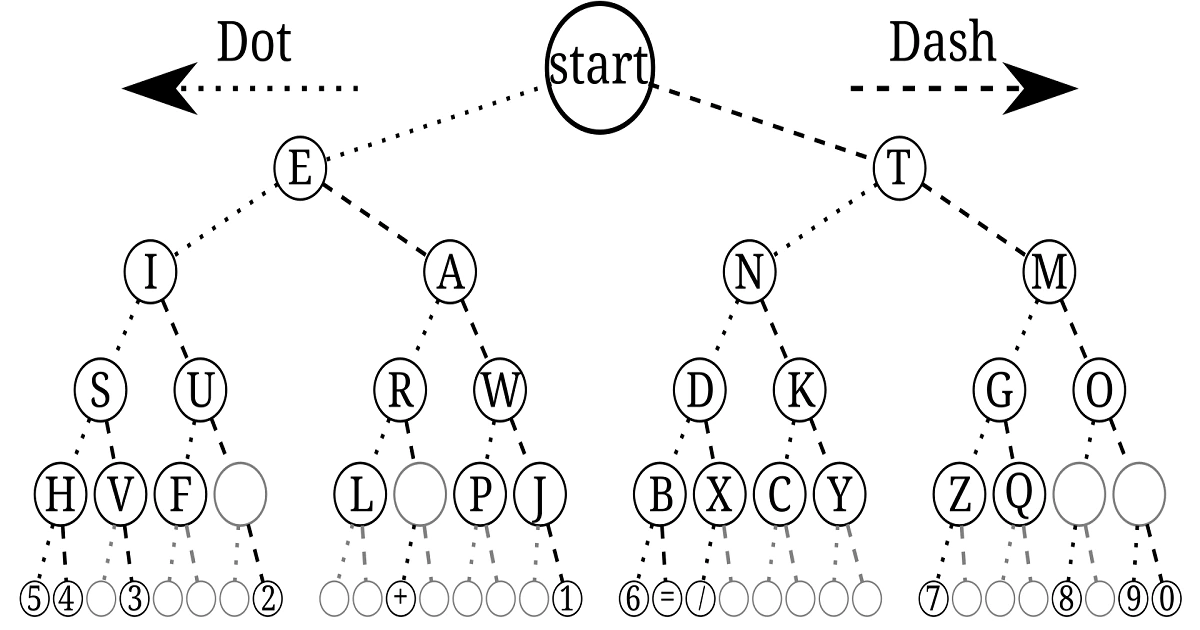
Don't try to memorize all 26 letters at once. Your brain remembers groups better than random patterns.
The Tiny Sound Family
- . = E
- .. = I
- ... = S
- .... = H
Every letter adds one more tiny sound. Your brain starts spotting the pattern quickly.
The Long Sound Family
- - = T
- -- = M
- --- = O
Same idea. The sound grows longer each time.
Another trick: write your name in Morse code and stick it somewhere you'll see every day.
One teenager learned Morse by writing his crush's name in dots and dashes inside a notebook margin during school breaks. A camper learned it by tapping messages on a picnic table after dark.
Little moments like that make the alphabet stick much faster than memorizing flashcards for an hour straight.
A Simple 15-Minute Daily Practice Routine
You don't need long study sessions. Short practice works better.
- Learn 3 new letters.
Start with easy patterns like E, T, A, I, and S.
- Say them out loud.
Don't only look at the symbols. Hear the rhythm.
- Type words into the translator.
Your name, favorite food, pet name, or a friend's nickname all work great.
- Test yourself without the chart.
Even remembering two or three letters from memory helps build speed.
- Listen before bed.
Many learners remember patterns better after hearing them repeatedly.
If you want faster progress, our guide on the five best techniques to learn Morse code fast shares beginner methods used by radio operators and hobbyists.
Real-Life Ways People Still Use Morse Code
Morse code didn't disappear with old telegraphs. People still use it today in surprisingly creative ways.
Camping and Flashlights
Imagine sitting across a lake at night with friends. One flashlight blink can send entire words once you know the alphabet.
Ham Radio
Radio operators still practice Morse because weak signals travel farther and stay easier to understand.
Emergency Communication
SOS remains one of the most recognized emergency signals in the world.
Secret Notes
Kids and teens still love passing hidden Morse messages in notebooks, text bios, and coded gifts.
You can explore more modern examples in modern uses of Morse code.
Practice Exercise: Can You Decode These?
Don't scroll too fast. Try solving them before checking the answers.
| Morse Code | Hint | Answer |
|---|---|---|
| ... | Three quick sounds | |
| --- | Three long sounds | |
| .- | Short then long | |
| -... | One long sound first |
Once those feel easy, try spelling full words from memory. Even simple words like CAT, SUN, or HELLO help train your ears quickly.
Common Morse Code Words You Can Learn Next
Once the alphabet starts feeling familiar, whole words become much easier.
Help in Morse Code
Learn one of the most important emergency words and how people signal it.
Love in Morse Code
A fun beginner word that helps you practice repeating sound patterns.
I Love You in Morse Code
Practice longer sentence rhythm while learning a famous phrase.
Famous Morse Code Words & Phrases
See how Morse phrases spread through ships, radios, and movies.
Ready to Start Reading Morse Without the Chart?
The first few days feel slow. That's normal.
Then one day you'll hear a pattern like ... and recognize S instantly without thinking.
That's when Morse code starts feeling alive.
Keep practicing small groups of letters. Listen more than you read. Use real words instead of random drills.
And most importantly: make it fun.