The SOS Signal: What It Means & How to Send Morse Code SOS


During emergencies, clear communication can save lives. But how do you send a message when you are in danger and need help immediately? You need one message that anybody nearby will understand instantly.
That message is SOS.
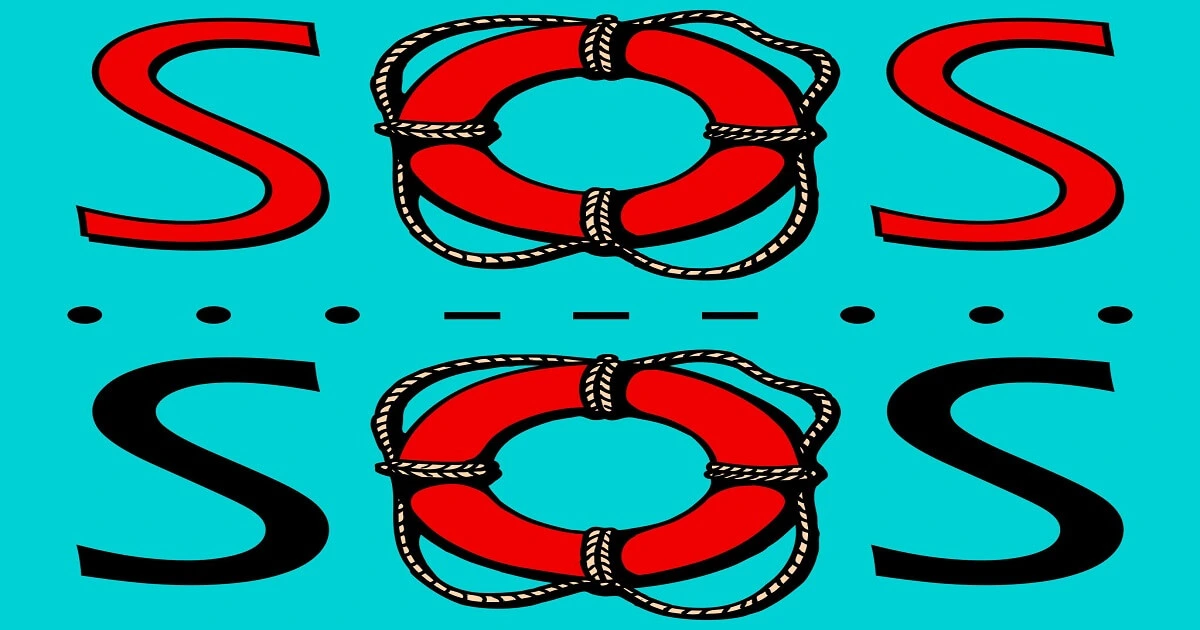
In Morse code, SOS looks like this:
... --- ...
Three short signals. Three long signals. Three short signals.
It might look simple, but this pattern has helped save people on sinking ships, stranded boats, icy mountains, and dark forests for more than a hundred years.
If you're new to Morse code, start with the Morse code alphabet, refer to our comprehensive chart. You can also explore other common Morse code words and phrases used throughout history.
Let's explore why SOS became the world's emergency signal, how people send it, and why this tiny pattern still matters today.
Why the SOS Signal Matters So Much
SOS works because it's hard to miss.
The pattern sounds different from normal Morse code words. Even if the signal is weak or noisy, the rhythm stands out:
Memory Trick
dit-dit-dit dah-dah-dah dit-dit-dit
You don't need special equipment either.
You can send SOS with:
- A flashlight
- A whistle
- A mirror
- Tapping on pipes or walls
- A phone flashlight
- Even waving your arms
That's why hikers, sailors, pilots, campers, and radio operators still learn it.
The signal crosses language barriers. You don't need to speak English, French, Arabic, or Spanish. The rhythm itself carries the message: "I need help."
Does SOS Stand for Anything?
A lot of people think SOS means:
- "Save Our Ship"
- "Save Our Souls"
- "Send Out Succor"
Those phrases sound perfect for an emergency signal.
But SOS actually doesn't stand for any words at all.
The letters were picked because they create one of the clearest patterns in Morse code:
| Letter | Morse Code | Signal Type |
|---|---|---|
| S | ... | Three short signals |
| O | --- | Three long signals |
| S | ... | Three short signals |
That's what made SOS easy to remember during a stressful emergency.
Before SOS: The Confusing Early Days of Distress Calls
Early wireless communication on ships was messy.
Different countries and radio companies used different distress signals. That created confusion during emergencies.
| Signal | Used By | Problem |
|---|---|---|
| CQD | British operators | Longer and easier to mishear |
| NC | American operators | Not globally recognized |
| SOS | International standard | Simple and universal |
Imagine hearing a weak radio signal during a storm. A complicated message could easily disappear into static.
SOS solved that problem with pure rhythm.
The 1906 Meeting That Picked SOS
In 1906, countries gathered in Berlin for the International Radiotelegraphic Convention.
They needed one distress signal everybody would recognize instantly.
Quick Timeline
- 1890s: Ships begin using wireless telegraph systems
- Early 1900s: Different countries use different distress calls
- 1906: Berlin convention selects SOS as the universal signal
- 1908: SOS officially starts international use
- 1912: Titanic sends one of history's most famous SOS calls
The choice wasn't about fancy wording.
It was about survival.
Three dots, three dashes, three dots could cut through radio noise better than longer combinations.
The Titanic and the SOS Signal
The most famous SOS call came from the RMS Titanic.
On April 14, 1912, the Titanic struck an iceberg in the North Atlantic.
As the ship began sinking, radio operators Jack Phillips and Harold Bride sent distress messages through the night.
CQD CQD SOS SOS CQD CQD SOS SOS
They used both the older CQD signal and the newer SOS signal because many ships were still adjusting to the new standard.
Nearby ships received the calls and rushed toward the Titanic's location.
The disaster shocked the world and pushed countries to take radio safety much more seriously.
If you'd like to see how Morse communication grew before the Titanic era, read the history of Morse code and the telegraph invention.
How to Send an SOS Signal Step by Step
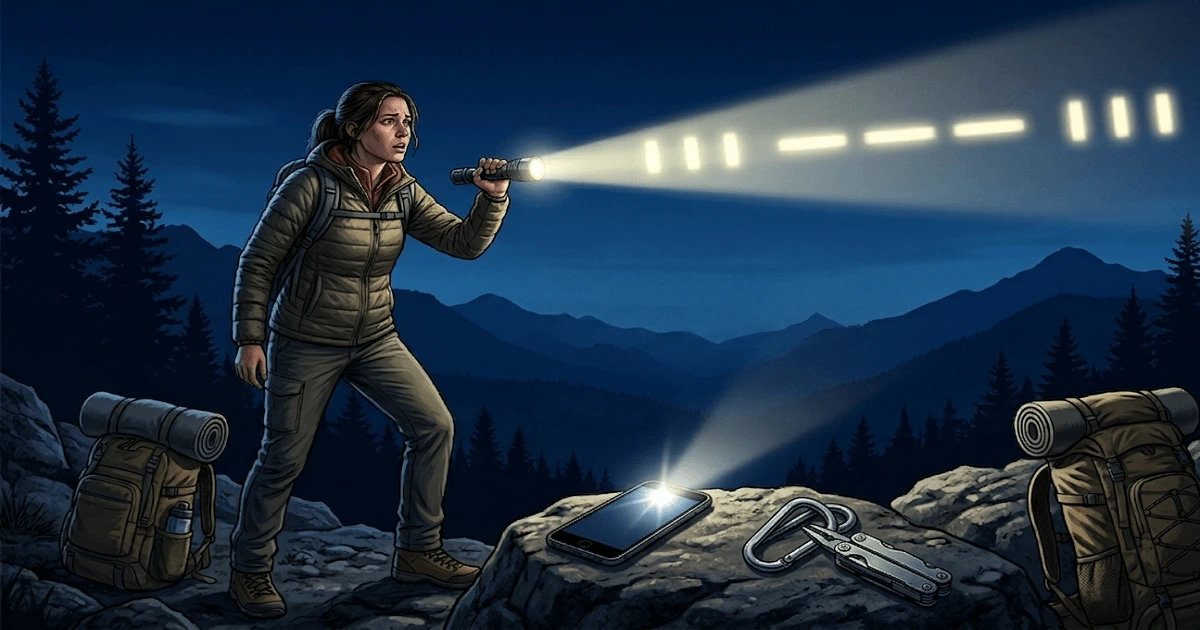
You don't need a radio operator's desk to send SOS.
You just need the rhythm:
Short • Short • Short
Long • Long • Long
Short • Short • Short
Send SOS with a Flashlight
- Flash the light quickly 3 times
- Flash slowly 3 times
- Flash quickly 3 more times
- Pause briefly
- Repeat the pattern
Want to practice this outdoors? Try our guide on sending Morse code with a flashlight.
Send SOS by Sound
You can whistle, clap, knock, or bang metal objects together.
Imagine you're trapped somewhere dark. Three quick taps followed by three long taps could help rescuers locate you.
Send SOS with Your Phone
Your phone flashlight works surprisingly well at night.
Some emergency apps even include automatic SOS flashing modes.
Real Situations Where SOS Still Helps
SOS isn't just an old ship signal from history books.
People still use it during emergencies today.
Lost Hikers
Hikers sometimes use flashlight SOS patterns at night when they lose trails or become stranded during storms.
Sailors at Sea
Marine radio operators still learn SOS as part of emergency signaling training.
Avalanche Rescue
Tapping patterns under snow or debris can help rescuers hear trapped survivors.
Amateur Radio
Ham radio operators still practice Morse code for emergency backup communication.
Fun Fact
Astronauts, military operators, scouts, and survival instructors have all trained with SOS because the rhythm works almost anywhere.
Easy Ways to Remember SOS
Morse code feels strange at first because you're learning rhythm instead of spelling.
These memory tricks help a lot:
Clap Pattern Trick
Clap quickly three times. Pause. Clap slowly three times. Pause. Clap quickly three more times.
Visual Trick
... --- ...
Sound Trick
Say it like a heartbeat rhythm: "quick quick quick, loooong loooong loooong, quick quick quick."