International Morse Code: Chart and Timing Rules


The code that works in any language
A pilot in Japan, a sailor in Brazil, and a ham radio operator in Germany can all understand the same three sounds: dit-dit-dit, dah-dah-dah, dit-dit-dit. SOS. Same thing everywhere, no translation required.
That's the whole idea behind international Morse code: one set of patterns for letters, numbers, and punctuation, agreed on by enough countries that it became the global standard. Radio, light, sound, touch: the medium doesn't matter. The code doesn't change.
This guide covers what international Morse actually is, how it differs from the older American version, why it's still used, and how to start learning it if you're new.
What Is International Morse Code?
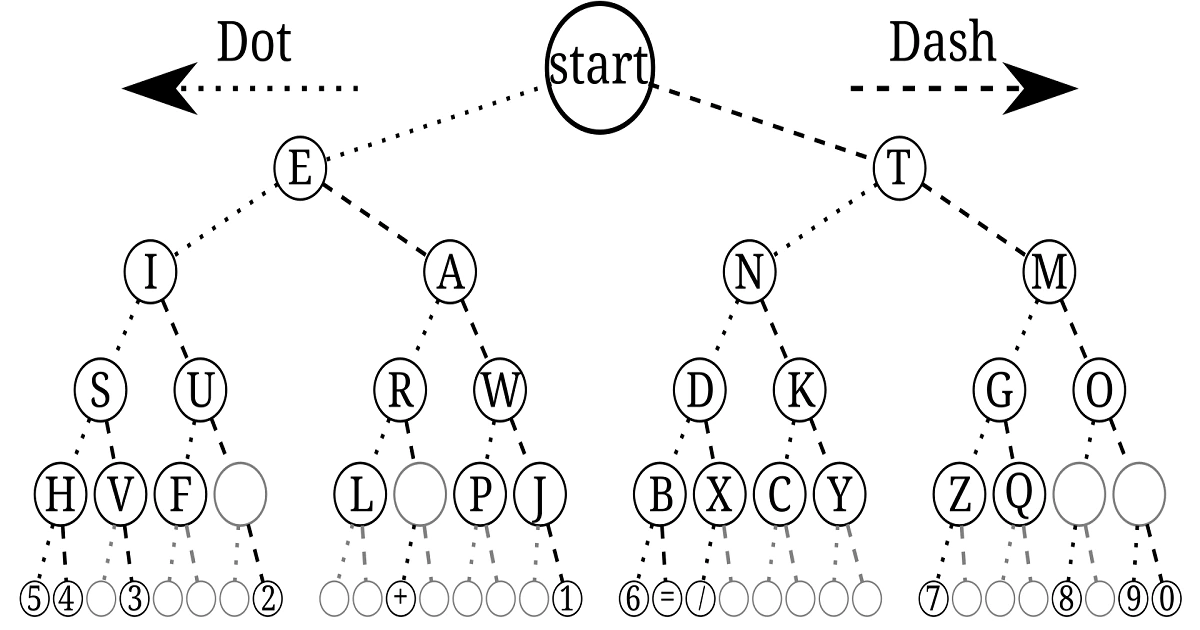
It's a system that converts text into two signal lengths: short (dots) and long (dashes). Every letter, number, and punctuation mark gets its own pattern.
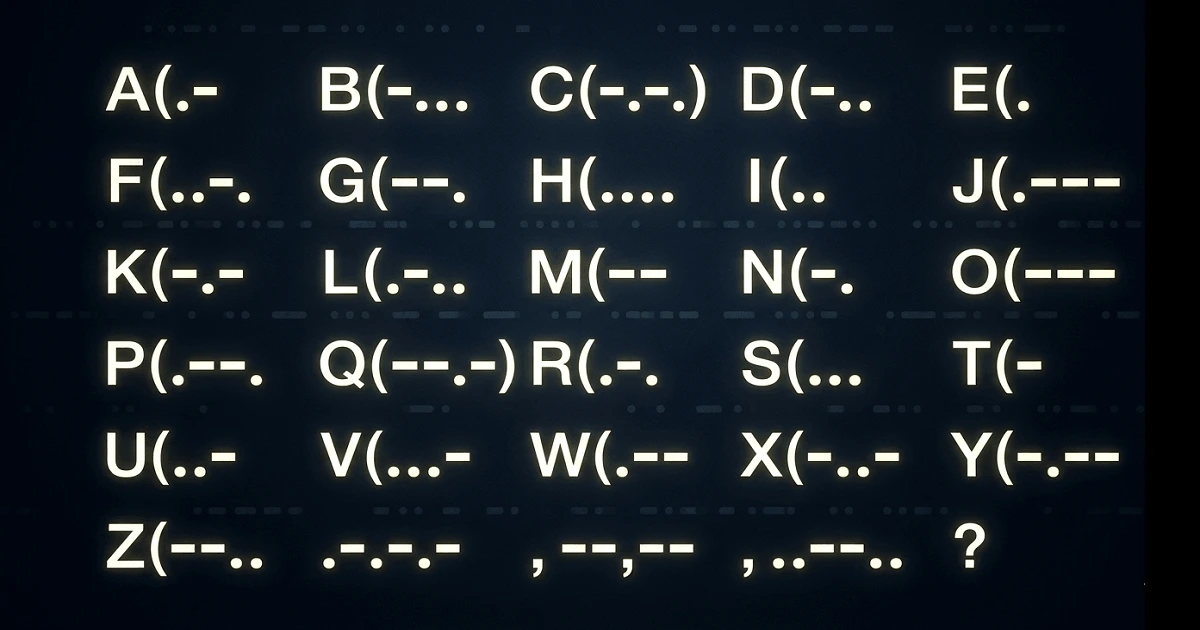
A is · –. B is – · · ·. C is – · – ·. SOS is · · · – – – · · ·.
The "international" part matters more than it sounds. The code maps to letters, not words, so it works across any language that uses the Latin alphabet: English, German, Spanish, French, and dozens more. There are also extensions for Cyrillic, Arabic, and Greek, though those aren't part of the core standard.
The official name, if you want it, is the International Radiotelegraph Alphabet, maintained by the International Telecommunication Union (ITU). Most people just say Morse code and mean this version.
Why Is It Called International Morse Code?
Because nations agreed to use it — that's the honest answer.
The original system, now called American Morse, was developed by Samuel Morse and Alfred Vail in the 1840s for the U.S. telegraph network. It had a problem: dashes had variable lengths depending on the letter, and the spacing rules were complicated enough that European operators couldn't easily pick it up. So they built a cleaner version. Fixed dash lengths. Simpler spacing. Less to memorize.
Three dates matter:
- 1851: The German-Austrian Telegraph Union adopted the simplified version across their network.
- 1865: The International Telegraph Union (now the ITU) met in Paris and made it the official global standard.
- 1912: The International Radiotelegraph Convention locked it in as the maritime distress standard, which is why SOS became universal.
The name comes from the adoption process, not the invention. It wasn't designed internationally; it became international because enough countries agreed it was better. The full story of how the system spread is in our guide to the history of Morse code and the telegraph.
International Morse Code Chart
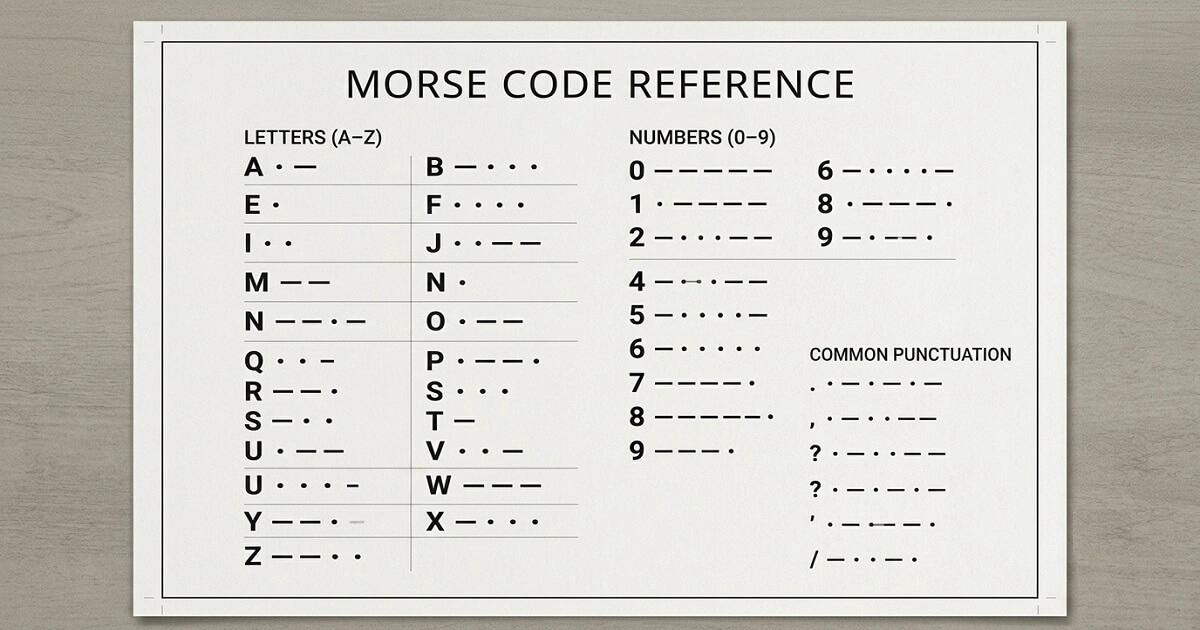
Here's the full chart. If you're looking for a quick reference, this is it.
Letters (A–Z)
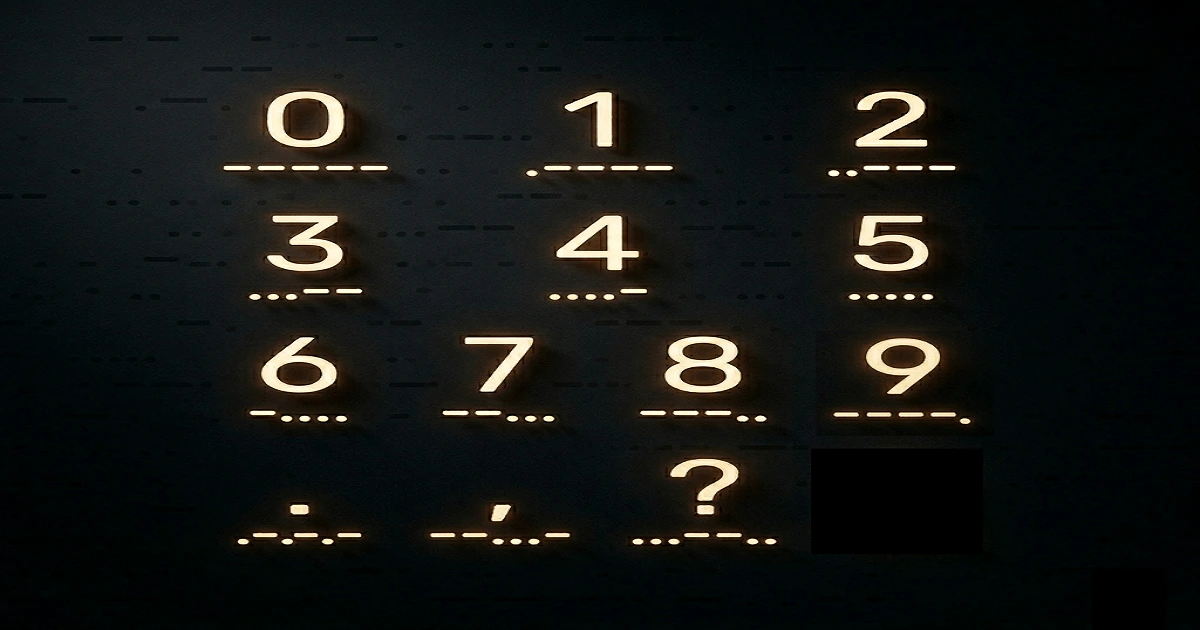
Numbers (0–9)
Common Punctuation
Need a deeper breakdown of numbers and punctuation? Check our full guide to Morse code numbers and punctuation.
International Morse Code Timing Rules
The patterns matter, but the spacing is what makes it readable. Get the timing wrong and the receiver hears noise.
Everything is measured against the dot, which is the base unit. A dash is three dot-lengths. The gap between signals within a single letter is one dot-length. Between letters, three dot-lengths. Between words, seven.
- A dot is 1 unit long.
- A dash is 3 units long.
- The gap within a letter (between dot and dash) is 1 unit.
- The gap between letters is 3 units.
- The gap between words is 7 units.
Pick any tempo, as long as it's consistent. Say your dot is 200ms. Then your dash is 600ms, your inter-letter gap is 600ms, and your word gap is 1.4 seconds. The actual speed doesn't matter much; the receiver adjusts to your pace. What has to stay constant is the ratio. Rush your gaps and letters blur together; drag your dashes and everything slows to a crawl. The full alphabet chart with spacing rules is in our Morse code alphabet and spacing guide.
International Morse Code vs American Morse Code
There are two versions, and if you're learning today, only one of them matters.
American Morse Code
The original. Developed by Samuel Morse and Alfred Vail in the 1840s for the U.S. telegraph network. It used variable-length dashes (some letters had short dashes, others long ones), plus extra spacing conventions that made it harder to transmit by radio. Designed for landline telegraphy in the US and stayed there. Mostly obsolete now, though a handful of enthusiasts still use it with historical equipment.
International Morse Code
The simplified version adopted in the mid-1800s. All dashes are exactly three dot-lengths, spacing is consistent, and it works over radio, something American Morse never managed. This is the version the ITU standardized and the one every ham radio operator, maritime navigator, and emergency signaling manual uses.
| Feature | International Morse | American Morse |
|---|---|---|
| Status | Current global standard | Historical, mostly obsolete |
| Dash length | Fixed (3× dot) | Variable by letter |
| Used for | Radio, aviation, maritime, emergency | US landline telegraphy (19th–20th century) |
| Learning difficulty | More consistent rules | Harder — irregular dash lengths |
If you're learning Morse, you're learning international Morse. American Morse is worth knowing exists, not worth learning.
Is Morse Code the Same in Every Country?
The short answer is yes for the Latin alphabet, no for everything else.
The ITU standard covers A through Z, 0 through 9, and common punctuation. An S is dot-dot-dot in New York, Tokyo, and Cairo. SOS looks and sounds identical everywhere, which is the whole point for emergency signaling. Countries that use non-Latin scripts (Russian Cyrillic, Greek, Arabic, Hebrew, Japanese kana) have their own Morse extensions that map onto those characters. Those extensions aren't part of the core international standard, but they exist and they're used.
So if you're sending in English, you're covered everywhere. If you're sending in Japanese, there's a system for that too, just a different one.
How to Learn International Morse Code
Don't start by memorizing the chart. Seriously. If you learn Morse visually (staring at dot-dash patterns on paper), you'll be slow indefinitely, because you'll always have to translate. Morse is an auditory language. You need to hear the rhythm of each letter until it's automatic, the way you recognize spoken words without sounding them out.
Start with the most common letters: E (one dot), T (one dash), A (dot-dash), I (dot-dot), N (dash-dot), S (dot-dot-dot), O (dash-dash-dash). Learn these seven first. They cover a huge portion of English text and give you enough to spell short words almost immediately.
Listen to each letter at a comfortable speed. Say it out loud: "di-dah" for A, "dah-di-dah-dit" for C. The spoken sound builds the association faster than visual memorization does.
Practice 15 to 20 minutes a day rather than two hours on weekends. Short daily sessions beat long sporadic ones because spaced repetition is how motor skills and pattern recognition actually get wired in. Our Morse code practice system is built around exactly this.
As for speed: 5 words per minute is where most beginners start. At 10 to 15 WPM you can actually communicate. At 20+ it starts feeling like a real skill rather than a slow cipher. Don't expect 20 WPM in a week. Experienced operators typically put in months of daily practice to get there. The guide to learning Morse code fast covers the methods that actually compress the timeline.
Where International Morse Code Is Still Used
Ham radio. Operators use it daily, partly for tradition and partly because Morse carries further on weak signals than voice does. It's also more battery-efficient. Some countries still require Morse proficiency for certain license classes.
Aviation navigation. VOR and NDB beacons (the ground-based radio stations aircraft use for navigation) broadcast their identifiers in Morse. When a pilot tunes to a VOR frequency, they hear a three-letter ID in Morse to confirm they're on the right station. Pilots learn to recognize these, not necessarily decode full messages.
Emergency signaling. SOS is still the standard distress signal, recognized globally. You can send it by flashlight, mirror, whistle, or tapping. No equipment needed beyond something that makes a sound or light. Our page on help in Morse code covers the key signals.
Assistive communication. People with locked-in syndrome or severe motor impairment have used Morse sent by eye blinks or muscle twitches to communicate. It's one of the few systems that doesn't need speech or fine motor control. Any repeatable voluntary movement will do.
Military and low-tech signaling. Morse still appears in military training for exactly the reasons above: it's hard to intercept, doesn't need complex hardware, and works when digital comms fail. More on this in our modern uses of Morse code article.
Common International Morse Code Examples
A few phrases worth knowing as practice targets:
- SOS : · · · – – – · · · (distress signal, sent as one continuous pattern)
- HELP : · · · · · – · · – · – – ·
- CQ : – · – · – – · – (ham radio call for any station listening)
- YES : – · – – · · · · · ·
- NO : – · – – –
Want to convert something yourself? The text to Morse translator on this site handles it in one click, with audio output and clipboard copy.