
Learning & Basics
Explore the fundamentals of Morse code, from understanding dots and dashes to basic communication techniques.


How Morse Code Actually Works
Every letter and number in Morse code maps to a unique sequence of dots and dashes. The timing between those signals is just as important as the signals themselves: a dot is one unit, a dash is three, and the spacing between letters and words follows the same fixed ratio.
For example, the letter "A" is dot-dash (·−), while "S" is dot-dot-dot (···). The letter "E", the most common in English, is just a single dot (·), intentionally assigned the shortest code to make transmission faster.
Unlike most digital systems, Morse code doesn't need complex technology to transmit. A flashlight, a whistle, or tapping a surface is enough. Once you understand the pattern behind the dots and dashes, you can send and read messages using almost anything.
The famous SOS distress signal became popular because the rhythm is incredibly easy to recognize: three short signals, three long signals, then three short ones again.
Why Learn Morse Code?
Learning Morse code builds skills that go beyond communication. Because it's pattern-based, it trains your brain to recognize sequences quickly, a skill that overlaps with music, typing, and language learning.
Here are a few concrete reasons people learn it:
- Emergency preparedness: SOS (···−−−···) can be sent with a flashlight, mirror, or phone torch when words aren't possible.
- Amateur (HAM) radio: Many countries still require or encourage Morse proficiency for radio licensing.
- Accessibility: Morse-based input systems are built into iOS and Android, allowing people with limited mobility to control their devices using just two inputs.
- Personal interest: Encoding a name or phrase for jewelry, tattoos, or gifts has become genuinely popular.
How Beginners Can Start
If you're new to Morse code, the most effective approach is to learn by ear from the beginning, not just by memorizing charts. The international standard timing (a dot is one unit, a dash is three) only becomes intuitive when you hear it.
Here's a practical starting path:
- Learn the five most common letters first: E (·), T (−), A (·−), N (−·), I (··)
- Use our translator to type short words and listen to the audio output
- Try decoding what you hear rather than reading the visual output
- Expand to the full alphabet once the first five feel automatic
Our Morse Code Alphabet Chart shows every character with pronunciation guidance, and the audio playback in the translator lets you adjust speed so you can slow things down while you're learning.
Tips to Learn Faster
- Use sound, not just sight: Visual memorization of dots and dashes is slower than learning the rhythm by ear
- Practice short sessions daily: 10–15 minutes every day beats a long session once a week
- Start with real words: Translating your own name or a short phrase keeps it engaging
- Don't try to memorize everything at once: Master five letters, then add five more
Consistency matters more than intensity. Even a few minutes of daily practice will show results faster than you expect. When you're ready, head to our Morse code practice page to put those patterns into use.
The Simple Pattern Behind Every Signal
Morse code only uses two building blocks: dots and dashes.
A dot takes one beat. A dash takes three beats. The pauses between letters matter too. Once you hear the timing a few times, it starts feeling less like memorization and more like music.
For example:
- E = .
- T = -
- A = .-
- S = ...
- O = ---
Short letters usually belong to common English characters. That keeps messages faster to send.
Your First 7-Day Morse Code Starter Plan
You do not need to learn the whole alphabet in one sitting.
Small daily practice works much better.
Day 1
Learn E, T, A, and I. Listen to their sounds repeatedly.
Day 2
Practice short words like IT, AT, and TEA using audio playback.
Day 3
Learn S and O so you can recognize SOS by ear instantly.
Day 4
Type your own name into the translator and replay it slowly.
Day 5
Practice numbers from 1 to 5 and tap them on a table.
Days 6 & 7
Listen to random letters and try decoding them without looking.
Easy Memory Tricks That Actually Help
Your brain remembers patterns faster when they connect to something familiar.
- The letter E is one dot. Think of it as the quickest possible sound.
- The letter T is one dash. A longer sound. Easy opposite.
- SOS sounds balanced and symmetrical. Short-short-short. Long-long-long. Short-short-short.
- Many beginners clap Morse rhythms aloud before they ever type them.
Try practicing while walking. Matching your steps to the rhythm makes the timing stick surprisingly fast.
Mistakes Almost Every Beginner Makes
Most people burn out when they attempt all letters and numbers at once. Learn small groups instead.
Morse code was built for sound. If you only stare at dots and dashes, decoding feels much slower.
Five focused minutes every day beats one giant study session on the weekend.
Downloadable Learning Materials
Beginner Questions People Ask All the Time
How long does it take to learn Morse code?
Most beginners can recognize a few letters in a single day. If you practice for 10 to 15 minutes daily, you can usually read simple words within a couple of weeks.
Should I memorize dots and dashes visually?
You can start that way, but learning by sound works much better. Morse code feels more like rhythm than spelling once your ears get used to it.
Is Morse code still used today?
Yes. Amateur radio operators still use it, sailors learn distress signals, and many people use Morse code for hobbies, tattoos, jewelry, and puzzles.
What is the easiest letter to learn first?
The letter E. It is just a single dot. After that, most people move to T, A, and I because the patterns stay short and easy to hear.
Our Articles
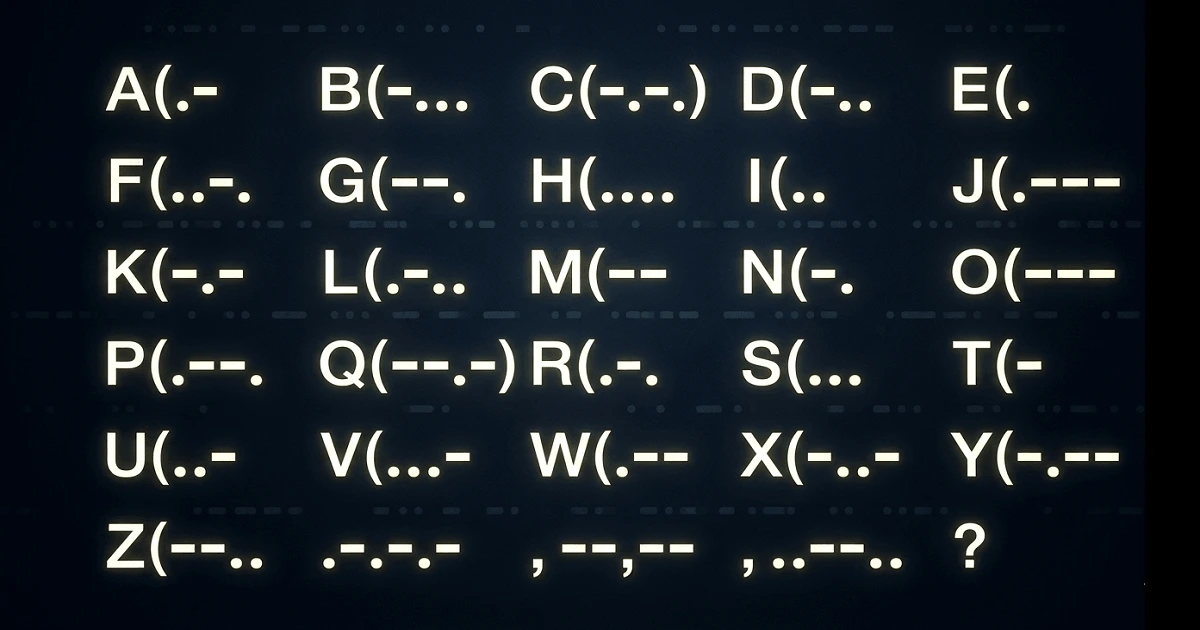
Learn the Morse Code Alphabet [Chart & Pronunciation]
A simple guide for kids and beginners to read and speak this hidden language.

Morse Code for Beginners: 5 Fast & Easy Learning Methods
Try five fun ways to learn Morse code faster without feeling overwhelmed.
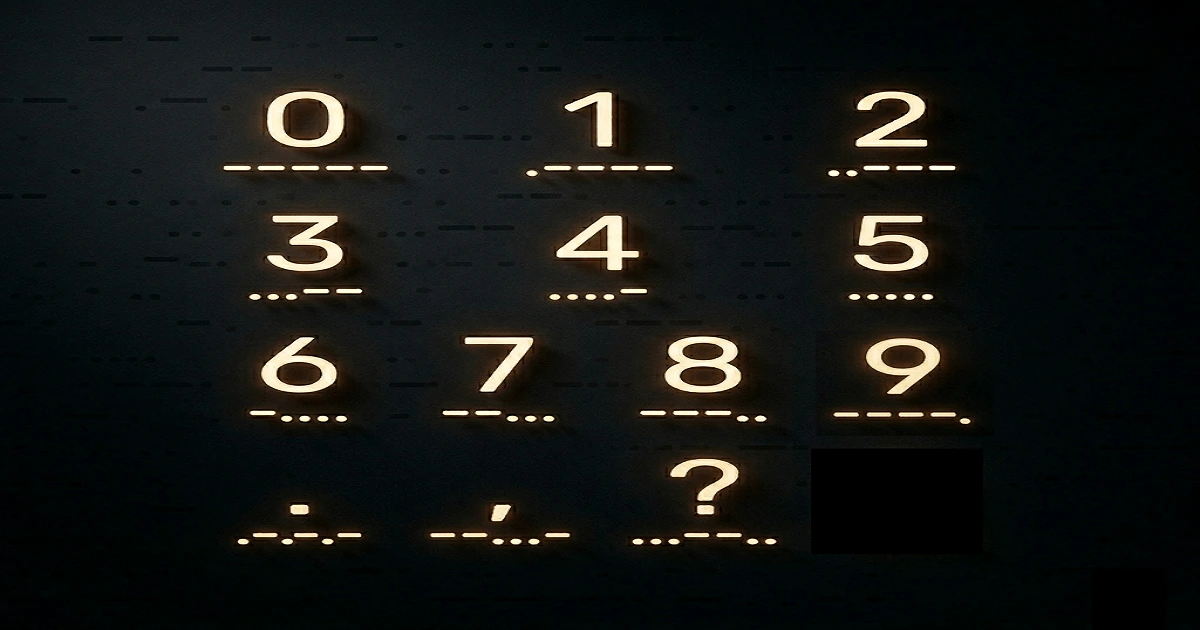
Morse Code Numbers & Punctuation: A Simple Full Guide
Learn numbers and punctuation marks with easy examples and audio practice.
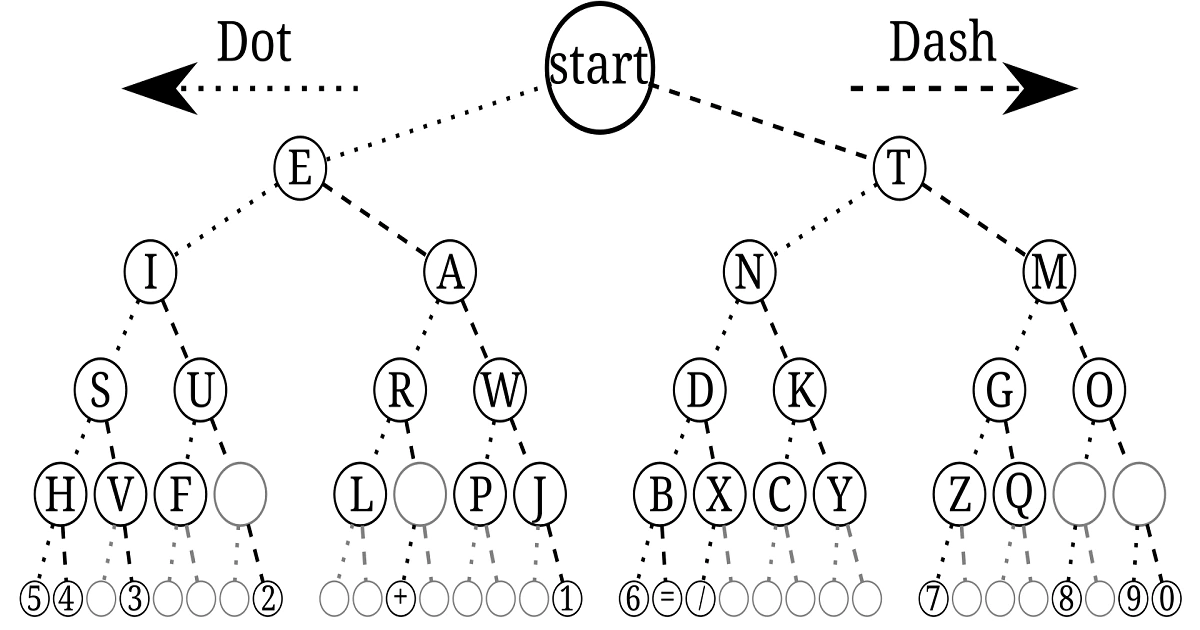
Morse Code Tree: The Fastest Way to Read Dots and Dashes
Turn dots and dashes into a branching tree for faster decoding and memorization.