Most Common Morse Code Words & Phrases Through History


Introduction: More Than Just SOS
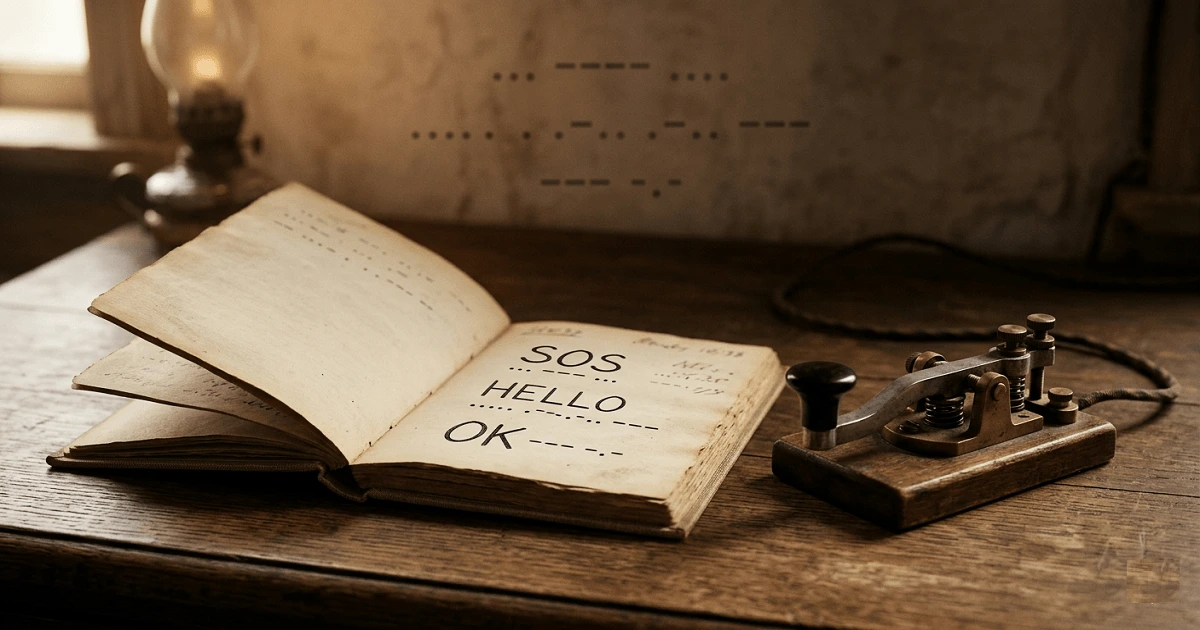
Morse code is far more than just SOS. For over 150 years, it was a living, breathing language. People used it to chat with friends, send urgent news, and save lives across oceans and continents. Because communication needed to be quick and clear, operators developed special short phrases and abbreviations. These let them talk faster without losing meaning.
Each era of Morse code history had its own favorite words and customs. Telegraph operators, ship radio officers, military signalers, and modern ham radio enthusiasts all shaped the language in their own way. Understanding these common phrases gives you a window into how people connected through dots and dashes across generations. Discover the secret words and phrases that shaped communication across different eras, and you will see Morse code as more than just beeps. It was a way for people to connect, help each other, and share information across the globe.
Universal Procedural Signals (Prosigns)
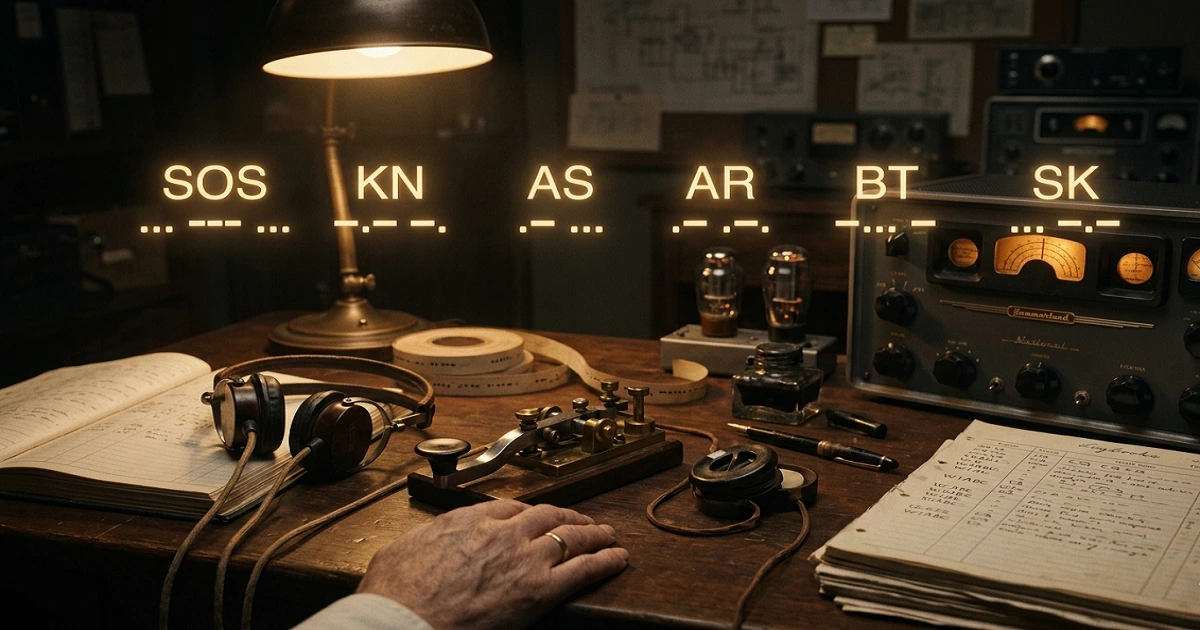
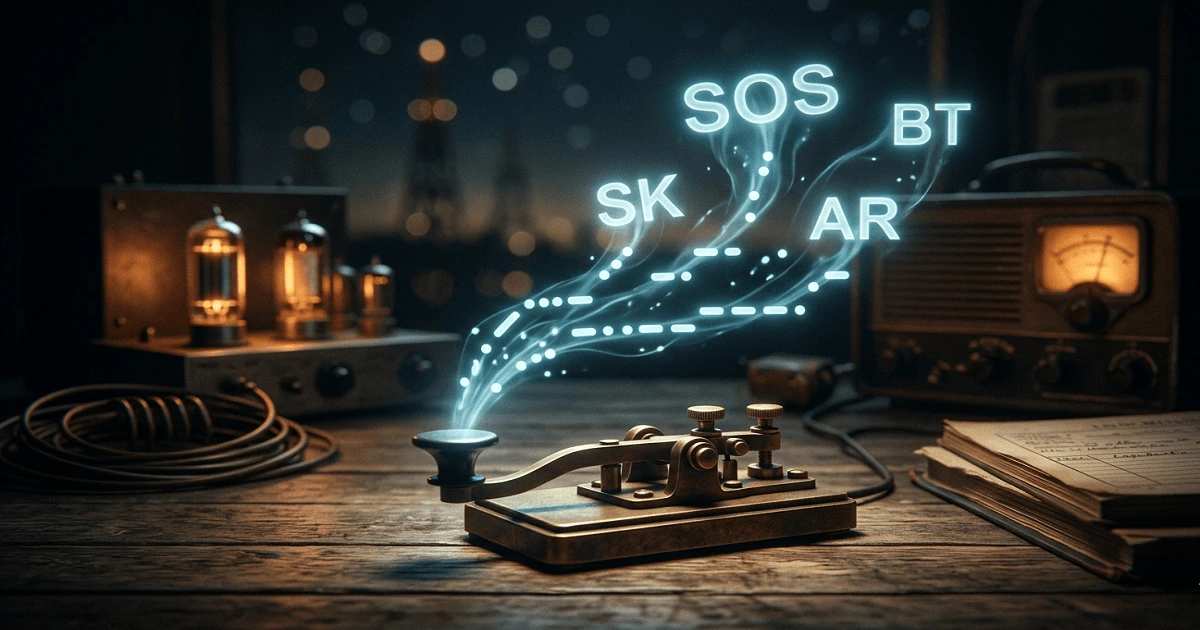
Prosigns are special signals, not normal words. They help operators manage their conversation and keep everything running smoothly. Think of them as the rules of talking in Morse code. Without them, conversations would be chaotic and confusing.
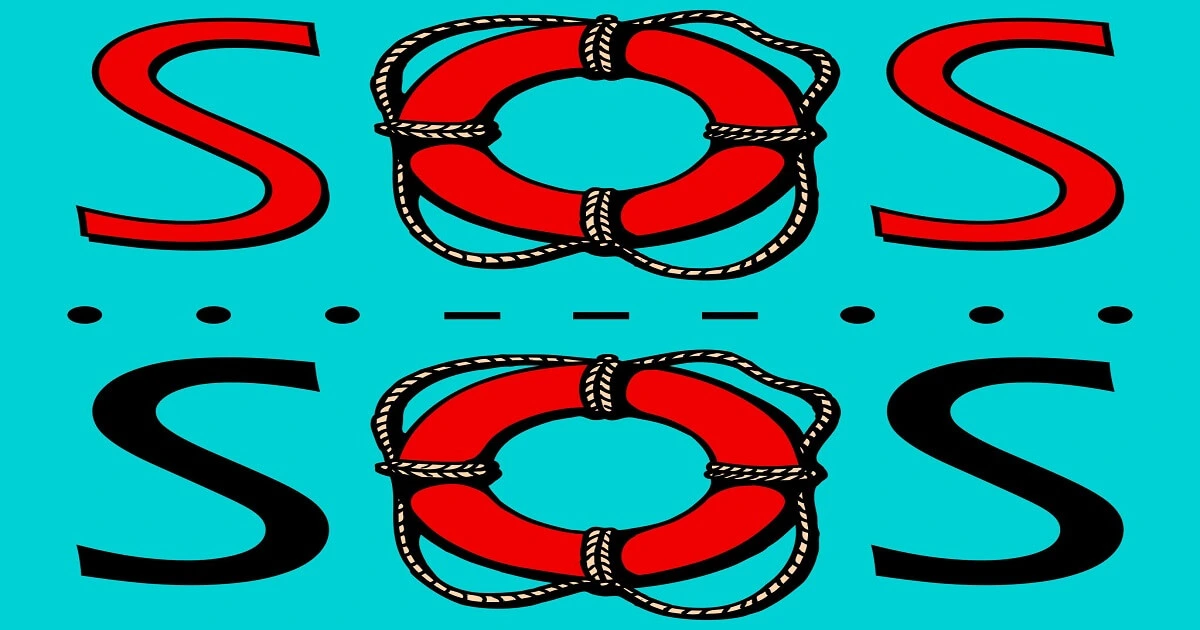
- SOS (...---...): The universal distress call. It means "I need help immediately." This signal was chosen because its pattern is very easy to recognize, even in bad conditions. Read more about the SOS distress signal history and how to send it.
- KN (-.-.): This means "go ahead" or more specifically, "only you respond." It is a polite way to hand the conversation over to a specific person and no one else.
- AS (.-...): This means "wait." If an operator had to step away from their key for a moment, they would send this signal so the other person knew not to transmit yet.
- AR (.-.-.): This means "end of message." It tells the person listening that you have finished your complete thought and are ready for their response.
- BT (-...-): This is a break or pause inside a message. It acts like a dash or an ellipsis in normal writing, separating ideas without ending the full message.
- SK (...-.-): This means "end of contact" or "signing off." It is used at the very end of a conversation when you are done talking and shutting down.
These procedural signals were the backbone of smooth Morse communication. Every operator learned them early because they kept conversations organized and polite.
Telegraph Era (19th Century)
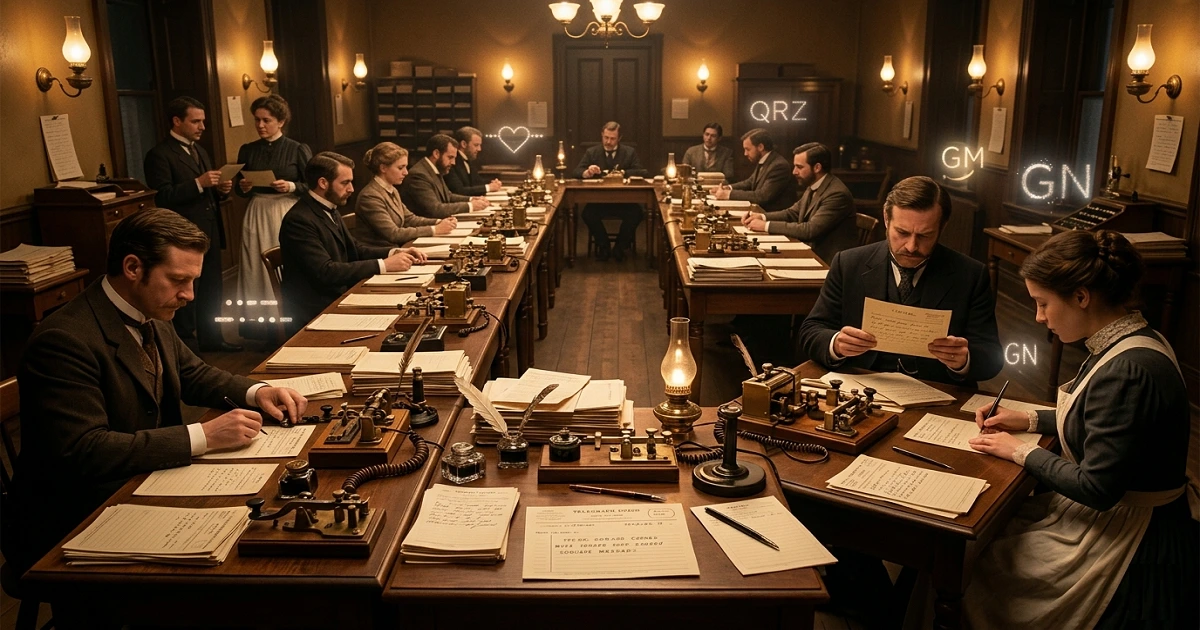
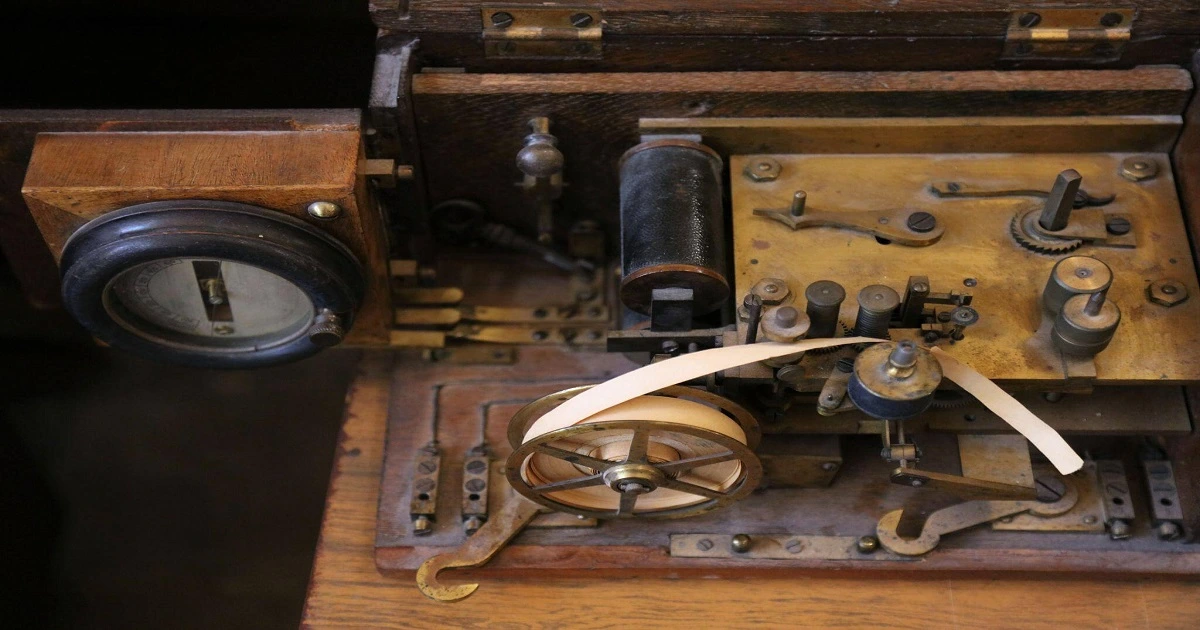
In the 1800s, people sent telegrams through telegraph offices. They paid by the word, so keeping messages short was essential. Every single word had to earn its place. This need for brevity created a unique style of communication that was direct but still personal. For more on this fascinating period, read about The History of Morse Code: The Telegraph Invention.
- STOP: This was not a command to halt what you were doing. In telegrams, there were no punctuation marks like periods. So people used the word STOP to show the end of a sentence. It made the message much clearer and prevented misunderstandings.
- LOVE: Even with short messages and tight budgets, people found room for their feelings. Families and couples often ended their telegrams with the word LOVE instead of writing out longer affectionate phrases. It saved money while still warming hearts. See the exact word pattern in the Love in Morse code translation.
- QRZ? (--.-- --..): This Q-code meant "Who is calling me?" An operator would send this if they heard their station's callsign but missed who was actually trying to reach them.
- GM / GN: Short for "good morning" and "good night." These friendly greetings were common between operators who worked together regularly and developed real friendships over the wires.
Telegraph operators became masters of saying more with less. Their abbreviations and shortcuts laid the foundation for the code phrases used in every later era.
Maritime & Aviation Golden Age
Ships at sea and planes in the sky relied on Morse code for safety. Their most important phrases were all about location, weather conditions, and reporting problems. When you are hundreds of miles from land, clear communication is not just convenient. It is a matter of life and death.
- "SOS DE [Callsign]": This was the standard format for a distress call. "DE" meant "from," borrowed from French. So "SOS DE MGY" meant "Distress call from the ship with callsign MGY." That was the Titanic's callsign, making this one of the most famous Morse messages in history.
- QTH (--.- -....): This means "My location is..." A ship returning to port would send something like "QTH NY" to announce its location was New York. Knowing where every vessel was located kept shipping lanes safe.
- WX (.-- -..-): This was the standard abbreviation for "weather." Reports about WX conditions were critically important for safe sailing and flying. Storms, visibility, and wind all got summarized under this short code.
- QRM (-.--. --.) / QRN (-.--. .-.): These two codes reported different types of problems. QRM meant "I am experiencing interference from another station." QRN meant "I am experiencing static from natural noise like lightning." Knowing the difference helped operators troubleshoot reception issues.
Maritime and aviation operators developed these phrases through years of practical experience. Every abbreviation was tested and proven in real conditions where clarity could save lives.
Military Communication
The military needed messages that were absolutely clear and impossible to misunderstand. Their phrases were all about confirming orders, showing urgency, and making sure nothing got lost in transmission. A misunderstood order could have serious consequences.
- ROGER (.-. --- --. . .-.): This did not simply mean "yes" or "okay." It specifically meant "I have received and understood your last message." It was a confirmation of understanding, not necessarily agreement.
- WILCO (.-- .. .-.. -.-. ---): This was even stronger than ROGER. It meant "I have received your message, and I will comply." It was a firm promise to follow the order exactly as given.
- BREAK BREAK: This signaled an urgent interruption. If an operator had critical information that could not wait, they would break into an ongoing conversation with this signal. Everyone knew to stop and listen immediately.
- Q-Codes: The military made extensive use of Q-codes for efficiency. QRM meant "Is someone interfering with your signal?" QSL meant "Can you acknowledge receipt of this message?" QRV meant "Are you ready to receive my transmission?"
- MAYDAY: Though more common in voice radio, this distress call originated from the French "m'aidez" meaning "help me." It complemented the Morse SOS signal in emergency procedures.
Military Morse phrases were designed to be unambiguous. Every word had a precise meaning that left no room for interpretation or confusion.
Modern Ham Radio
Today, amateur "ham" radio operators keep the Morse code tradition alive and well. They have built a friendly, global community with its own customs and favorite phrases. The tone is warmer and more conversational than the older professional uses. Learn more about modern uses of Morse code in today's world.
- CQ CQ CQ (-.-. --.- -.-. --.- -.-. --.-): This is a general call meaning "I wish to talk to any station that can hear me." It is like standing on a mountaintop and shouting, "Hello, is anyone out there?" Ham operators send this when they want to start a conversation with whoever might be listening.
- RST 599 (.-. ... - ..... ----. ----.): This is a signal report system. The first number rates readability from 1 to 5. The second rates signal strength from 1 to 9. The third rates tone quality from 1 to 9. A "599" report means "Your signal is perfectly readable and very strong with a pure tone." It is the best report you can give or receive.
- 73 (--... ...--): This is the most famous ham radio phrase of all. It simply means "best regards" or "warm farewell." It is a friendly, universal way to end a conversation with someone you may have just met across the world. For related phrases, check the emergency help phrase in Morse code.
- 88 (---.. ---..): This is a less common but sweet variation on 73. It means "love and kisses" and is sometimes used between operators who are close friends or family members.
A Sample Ham Radio Conversation:
Here is how a typical friendly exchange might unfold between two ham operators:
- CQ CQ CQ DE AB1CD (Calling anyone who can hear me, this is station AB1CD)
- AB1CD DE ZY2X KN (AB1CD, this is station ZY2X responding. Go ahead, only you.)
- GM DR OM RST 599 73 (Good morning, dear old man. Your signal is perfect. Best regards!)
- TNX FB 73 SK (Thanks, fine business. Best regards, signing off now.)
Summary & Quick Reference
Here is a quick overview of how the most common Morse code phrases evolved across different eras:
| Era | Most Common Phrases | What They Were For |
|---|---|---|
| Telegraph | STOP, LOVE, QRZ? | Sending cheap, clear personal messages |
| Maritime/Aviation | SOS, QTH, WX, QRM | Safety, location, and weather reports |
| Military | ROGER, WILCO, BREAK | Giving and confirming orders clearly |
| Ham Radio | CQ, 73, RST | Making friends and giving signal reports |
The Most Common Morse Code Phrases Overall:
- SOS (...---...): The universal cry for help recognized worldwide.
- 73 (--... ...--): The universal sign of friendship among radio operators everywhere.
- CQ (-.-. --.-): The call that starts countless conversations across the airwaves.
- ROGER (.-. --- --. . .-.): The timeless confirmation that a message was received and understood.
These phrases remind us that Morse code was never just a cold technical tool. It was a way for real people to connect, help each other, and share their lives across any distance. Whether it was a telegram operator sending LOVE to a distant family, a ship's officer signaling SOS in a storm, or a ham radio enthusiast sharing a friendly 73 with a stranger who becomes a friend, Morse code carried human warmth through dots and dashes. If you want to join this living tradition, check out our guide on 5 Fast & Easy Methods to Learn Morse Code and start tapping out your own story.