Help in Morse Code: How to Signal It in Emergencies


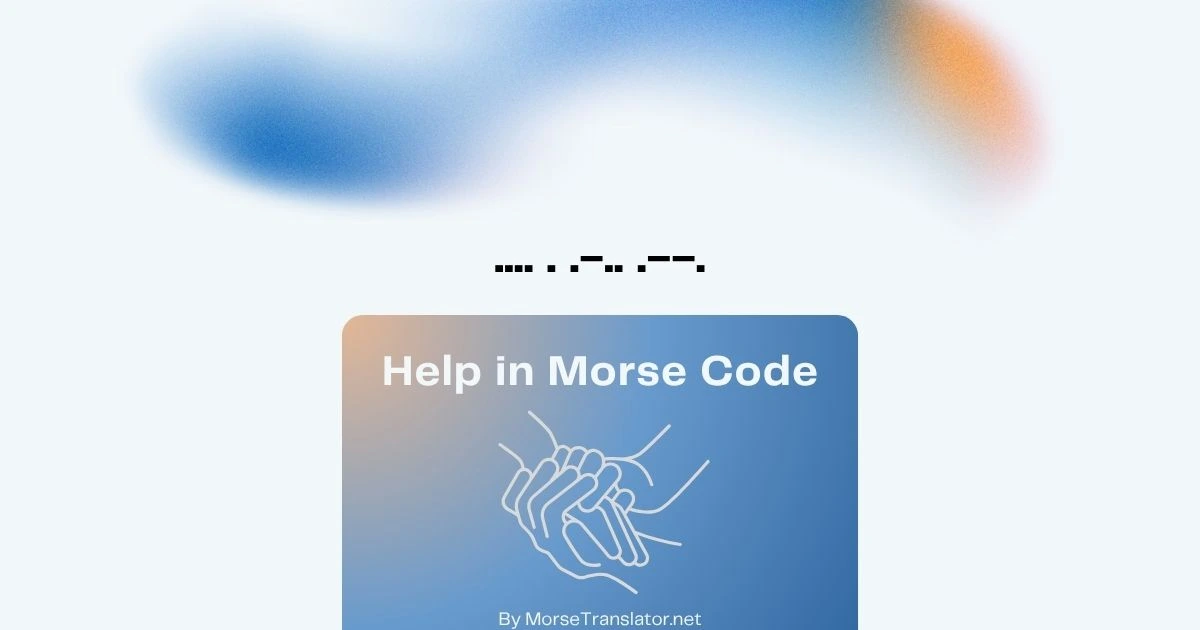
You hope you never need this word. You learn it anyway. That is the whole point of emergency preparedness. A few minutes of practice now could give you a way to reach someone when your voice fails, your phone dies, or you are trapped somewhere with no obvious way out. The distress word "help" in Morse code is written as: .... . .-.. .--.
How to Write the Signal
Here is the word in plain text:
Help
And here in International Morse Code:
.... . .-.. .--.
Each group of dots and dashes stands for one letter. The spaces between those groups are what keep the message readable. Sloppy spacing turns a clear signal into noise. For a full letter reference, visit the Morse code alphabet chart.
Letter-by-Letter Guide
Learning the sequence one letter at a time helps it stick, even under stress.
H
....
E
.
L
.-..
P
.--.
H is four quick taps. E is the shortest signal in the whole alphabet, just one tap. L mixes short and long, and P finishes with a distinctive short-long-long-short rhythm. This one word gives you four very different Morse patterns to practice. Master it and you have covered a lot of ground.
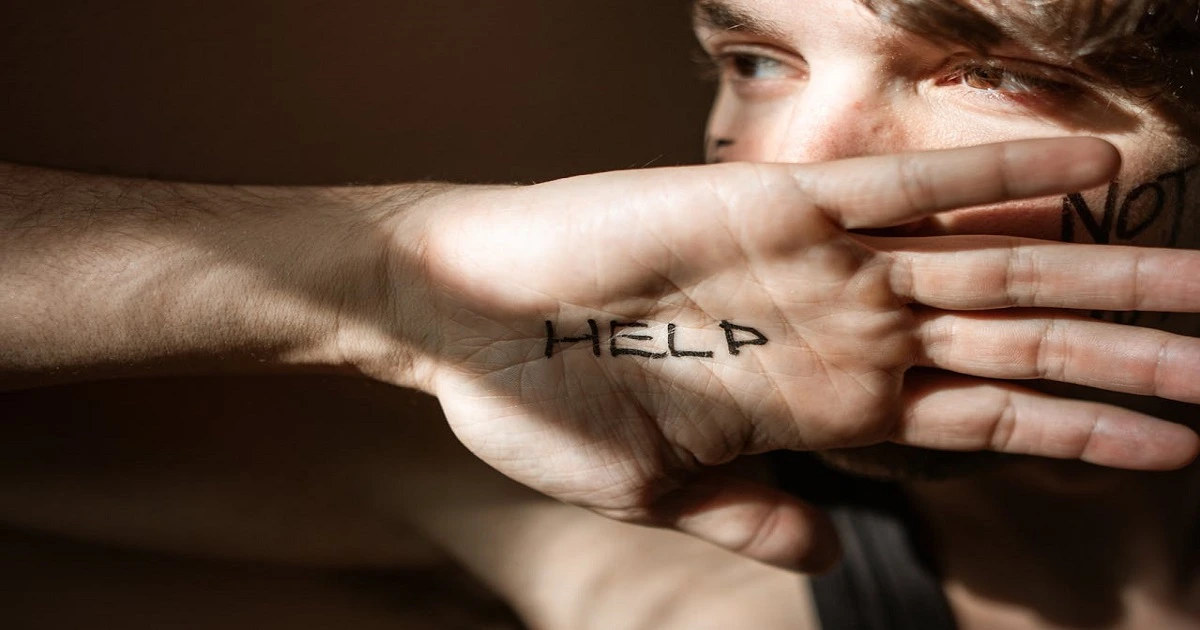
Help vs SOS: Know the Difference
Help in Morse code: .... . .-.. .--.
SOS in Morse code: ... --- ...
SOS is the universal distress signal. It is shorter, faster, and recognized everywhere. It has an official standing in international maritime and aviation regulations. "Help" spells out a specific request. It is not an official distress call, but it can communicate your need more clearly in certain situations.
So which one should you learn first? SOS. Always. Read the full story in our SOS distress signal guide.
Once you know SOS, learn this word too. In some emergencies you want to spell out exactly what you mean. A patterned "help" can cut through confusion when an alarm alone might not be enough.
When Silence Is Your Only Option
There are moments when making noise is dangerous. You might be hiding. You might be in a situation where drawing attention to yourself would make things worse. In those moments, sound-based signaling is not an option.
Tapping on a wall or pipe gives you a way to communicate without raising your voice. A flashlight blinked through a window carries no sound at all. A phone screen flashed in rhythm is silent but visible from far away. The ability to signal without speaking is one of the most underrated emergency skills you can have.
Real-World Emergency Scenarios
Lost in the Backcountry
Hikers and hunters lose trails and phone signals all the time. A headlamp or flashlight can send .... . .-.. .--. across long distances after dark. Light carries farther than sound in open terrain, and search teams are trained to notice unusual patterns.
House Fire with Heavy Smoke
Smoke can make shouting impossible and dangerous. Tapping the signal on a wall or floor alerts firefighters who are trained to listen for exactly this kind of patterned noise during search operations.
Vehicle Stranded in an Isolated Area
Your horn and hazard lights can send the pattern. Short honks for dots, longer for dashes. The lights work day or night. It may not spell out words to every passerby, but repeated deliberate signaling is universally recognized as a call for attention.
Boating Emergency
Over water, a whistle carries far. Short and long blasts follow the same rhythm. Ships and rescue vessels monitor for unusual signals. A steady pattern of four short, one short, one short-long-short-short, and one short-long-long-short is hard to ignore.
Common Mistakes When Sending This Signal
Even a simple four-letter word can go wrong if you are not careful. The most frequent errors happen under pressure, which is exactly when you are most likely to need this skill. Knowing the pitfalls ahead of time helps you avoid them.
- Rushing the rhythm. Nerves make people speed up. Dots become dashes. Dashes become dots. The message turns into noise. Slow down. Accuracy matters more than speed.
- Forgetting the gaps between letters. Without clear pauses, H bleeds into E and the whole word becomes unreadable. Pause deliberately between each letter.
- Giving up too soon. In an emergency, repeat the signal. Send it. Pause. Send it again. A single transmission might be missed. A repeated pattern gets noticed.
- Using the wrong tool for the environment. A flashlight works at night but is useless in bright sunlight. Tapping works indoors but not across open terrain. Match your method to your surroundings.
Practice these signals before you need them. Muscle memory kicks in when your brain is panicking. The Morse code practice page has interactive drills that build exactly this kind of automatic recall.
Ways to Send the Signal
The same pattern works across many different tools. Pick the one that fits your situation.
- Flashlight or phone light. Short flashes for dots, longer for dashes. Read the flashlight signaling guide for detailed timing instructions.
- Tapping on hard surfaces. Walls, pipes, doors, tables. The rhythm is the same no matter what you tap.
- Whistle blasts. Short and long. Sound carries well across open terrain and water.
- Car horn. In a vehicle emergency, patterned horn presses get attention quickly.
No matter which method you use, timing is the key. Keep reading for the exact rhythm.
How to Send It with Correct Timing
The rhythm of Morse code is based on standard units of time.
- A dot lasts 1 unit.
- A dash lasts 3 units.
- The space between dots and dashes in a letter is 1 unit.
- The space between letters is 3 units.
- The space between words is 7 units.
At a calm, steady pace, the full word "help" transmits in about three to four seconds. Here is what it sounds like spoken out loud:
H: di-di-di-dit
E: dit
L: di-dah-di-dit
P: di-dah-dah-dit
Tap it on a table while saying the sounds. Your ears and hands will learn faster than your eyes.
How to Signal "Help Me"
Adding one more word tells rescuers that you are the one in trouble.
Help me in Morse code: .... . .-.. .--. / -- .
The slash (/) marks the space between words. M is -- and E is .. So the full phrase flows naturally: four dots for H, a single dot for E, dot-dash-dot-dot for L, dot-dash-dash-dot for P, then a distinct pause before two dashes and a dot.
If you can send "help," adding "me" is only two more letters. It makes your message personal and direct.
Other Emergency Signals Worth Knowing
Morse code has been used in distress situations for over a century. Besides SOS and "help," a few other signals stand out.
- MAYDAY (voice call) - the spoken equivalent of SOS, used over radio by ships and aircraft in life-threatening situations.
- PAN-PAN - a lower-level urgency call, signaling a situation that needs attention but is not immediately life-threatening.
- CQD - the distress call used before SOS became the global standard. Still recognized by older radio operators.
You can read more about these in our common Morse code words and phrases history. The International Telecommunication Union (ITU) also provides full regulations on distress signals in its Radio Regulations, and the U.S. Coast Guard offers practical advice on visual and audible signaling for mariners.
Quick Practice Tips
You do not need to learn the whole Morse alphabet to be ready. Focus on this one word and you will have a valuable tool.
- Start with H and E. Four quick taps, then a single tap. That is two letters already.
- Add L and P. These two have mixed dots and dashes. Practice them separately, then join all four together.
- Use the Play Sound button above. Listen to the rhythm a few times. Then close your eyes and try to hear each letter.
- Tap the word once a day. On your desk, on your leg, on a wall. Build the muscle memory now so it is there when you need it.
If you want to go further, the guide on how to learn Morse code fast walks you through the whole alphabet step by step.
Final Thoughts
Four letters. Eight symbols. A skill that takes minutes to learn and costs nothing to keep. Once you know it, you have a backup communication channel that works without technology, in silence or in noise, with light or with sound. Learn it. Practice it once in a while. Hope it stays unused. But trust it will be there if you ever need it.