Why Is It Called Morse Code? The Story Behind the Name


A Code Needs a Name
You know about dots and dashes. You know how to send a secret message or tap out an SOS in an emergency. But have you ever stopped and wondered about the name itself? Why is it called Morse code?
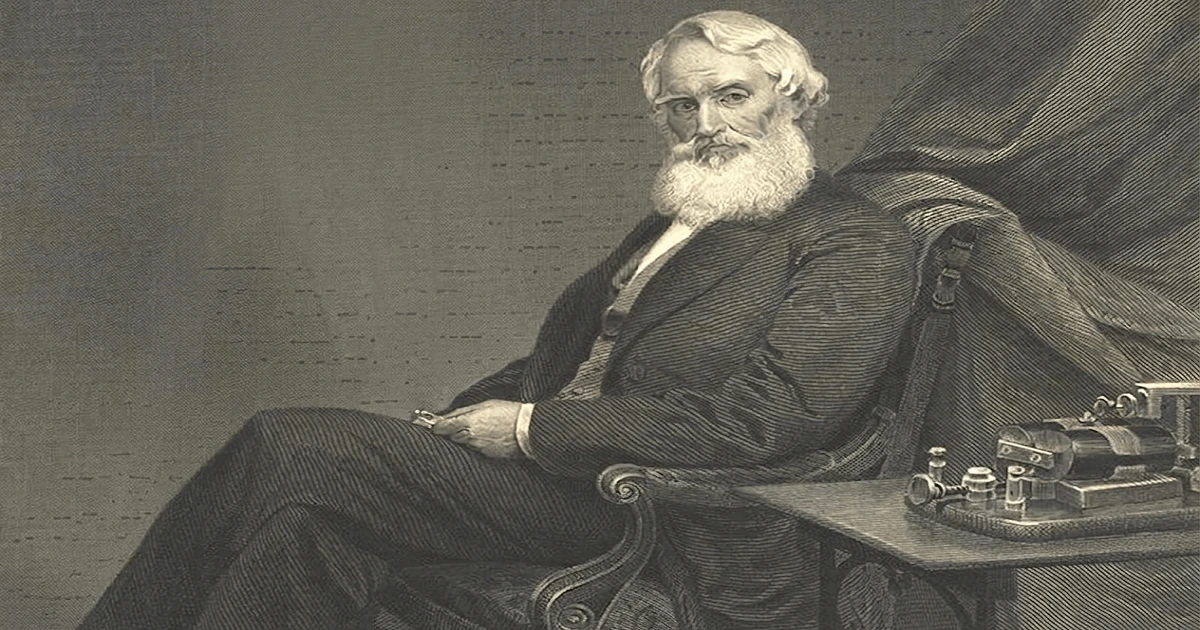
It sounds like a secret name, doesn't it? Mysterious and technical all at once. The answer is a fascinating story about the man who helped invent it. His name was Samuel Finley Breese Morse. Understanding his journey from famous painter to world-changing inventor is the key to understanding why his name became forever linked to the language of dots and dashes.
Who Was Samuel Morse?
Samuel Morse was not always an inventor. In fact, for most of his early life, he was a very famous and successful artist. He loved to paint big, beautiful pictures of people and historical events. His portraits were in high demand, and he even served as a professor of art at a university. Nobody who knew him back then would have predicted that his name would one day be synonymous with telegraphs and coded messages.
But one day, a deeply sad event changed everything. He was away from home, working on a painting commission in another city. A messenger arrived with a letter. The letter said that his beloved wife had fallen very ill. He packed up immediately and rushed home as fast as he could.
But the journey took days. By the time he finally arrived, his wife had already died and been buried. The message about her illness had simply taken too long to reach him.
He was heartbroken, but this tragedy planted a powerful seed in his mind. He thought, "There must be a faster way to send important news across long distances. There has to be."
The Big Idea on a Ship
A few years after his wife's death, Samuel Morse found himself on a ship sailing back from Europe. During the long voyage, he overheard a group of passengers having a fascinating conversation. They were scientists, and they were discussing a new discovery called the electromagnet.
They talked about how electricity could travel instantly through a wire and make a metal object magnetic at the other end. Samuel Morse was not an electrician. He did not have a scientific background. But he was an intensely curious man with a mind that never stopped working. As he listened to these scientists talk, pieces began falling into place in his imagination.
Right there on the deck of that ship, he had a brilliant flash of insight. He thought, "If electricity can be seen instantly along a wire, then surely intelligence can be transmitted by electricity." He grabbed his notebook and began frantically sketching.
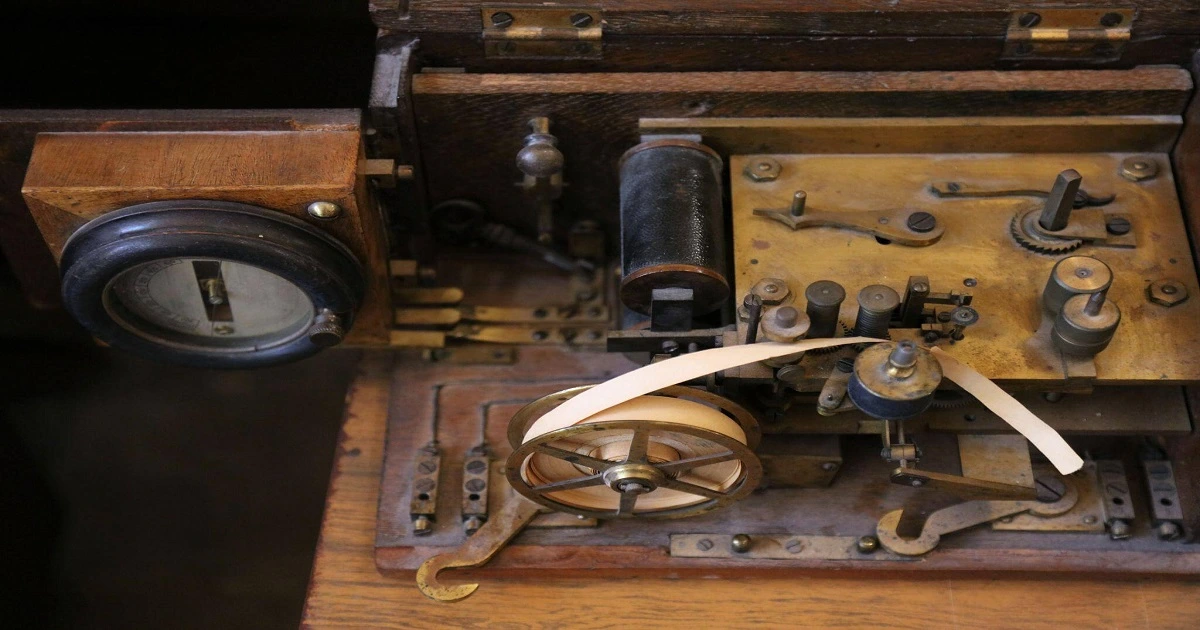
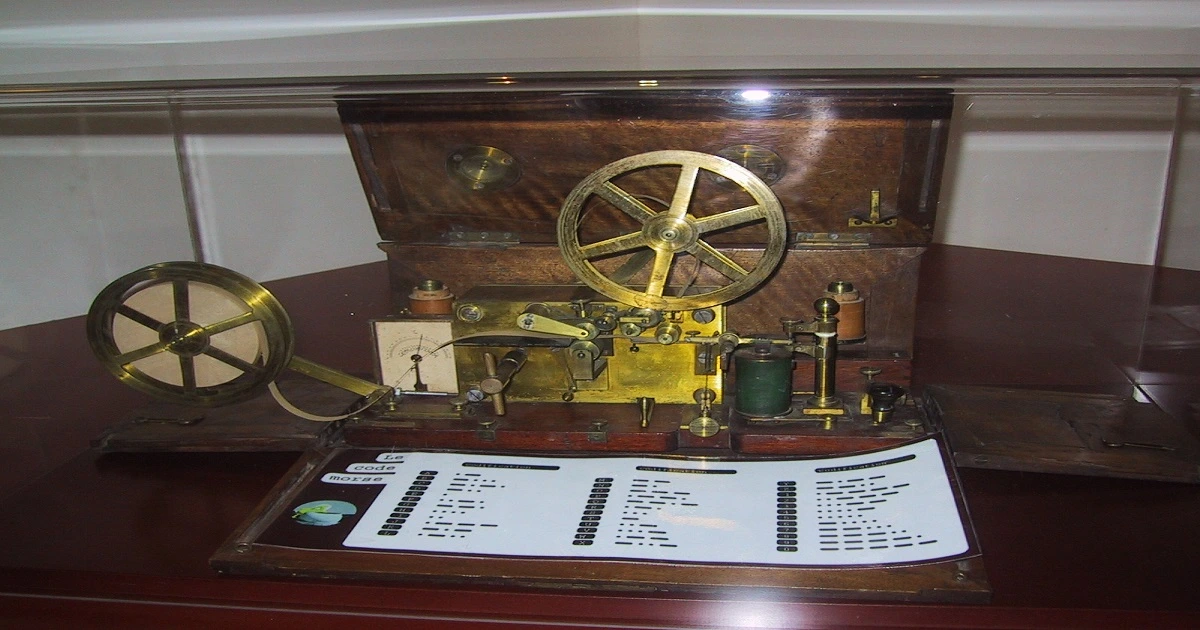
He drew out his first rough ideas for a machine that could send messages using electrical pulses. He called it the "Recording Telegraph." The big idea was born. If you want to understand how that idea grew into a global communication network, read our full article on The History of Morse Code: The Telegraph Invention.
It Was a Team Effort
Samuel Morse had a great vision and a lot of determination, but he needed help to turn his sketches into reality. He was a painter by trade, not an engineer or a machinist. Fortunately, he found the right people.
He became friends with a brilliant scientist named Joseph Henry. Henry had already built his own working telegraph and understood electromagnetism deeply. He was generous with his knowledge and shared what he had learned with Morse. Henry's research and advice gave Morse the scientific foundation he was missing. Interestingly, Henry was a professor at what is now Princeton University and later became the first Secretary of the Smithsonian Institution.
Then, a skilled mechanic named Alfred Vail joined the team. This partnership proved to be absolutely crucial. Alfred Vail was practical and mechanically gifted. He helped Morse build a much better, more reliable telegraph machine. But Vail contributed something even more important. He helped create the dot-and-dash code system we know today. Some historians even believe that Alfred Vail invented most of the actual code itself, the specific patterns for each letter.
So if other people helped so much, and if Vail possibly designed the code, why is it called Morse code and not Vail code?
Why Morse Got the Credit
Samuel Morse was the undisputed leader of the team. He had the original vision, the very first spark of the idea. More importantly, he worked tirelessly to get people to pay attention to the invention. An invention that nobody knows about is just a forgotten sketch in a notebook.
Morse took on the enormous challenge of convincing the United States Congress to fund the project. He went to Washington and asked them for money to build a test telegraph line from Washington to Baltimore. He demonstrated his machine, argued his case, and wouldn't take no for an answer. Eventually, Congress agreed to give him the funding.
When the test line was finally completed, Morse was the one who sat down and sent the first famous public message: "What hath God wrought." Because he was the leader, the public face, and the driving force behind the whole project, the code was named after him.
It is like a school project. Sometimes, the whole project gets named after the person who had the idea and stood up to present it to the class, even if everyone on the team contributed something valuable.
For another perspective on Morse's life and legacy, the Library of Congress collection on Samuel Morse offers fascinating original documents and letters.
A Name That Stuck
At first, people called it the "Morse Alphabet." Soon, everyone just knew it as Morse code. You can learn the full Morse Code Alphabet here.
The name spread across the world. It became a universal term, understood in every language. Even today, nearly two hundred years later, we still call it Morse code without a second thought.
So, the name is really a thank you to Samuel Morse. It reminds us of the man whose big idea, personal tragedy, and relentless hard work gave us a way to talk across miles with just a simple click. He took the pain of a message that arrived too late and turned it into a system that let messages fly faster than anyone had ever imagined possible.
If you want to see how that idea still matters now, read about the modern uses of Morse code and discover how Samuel Morse's invention continues to help people and connect lives in ways he could have never predicted.